
Dressings in Plain Words
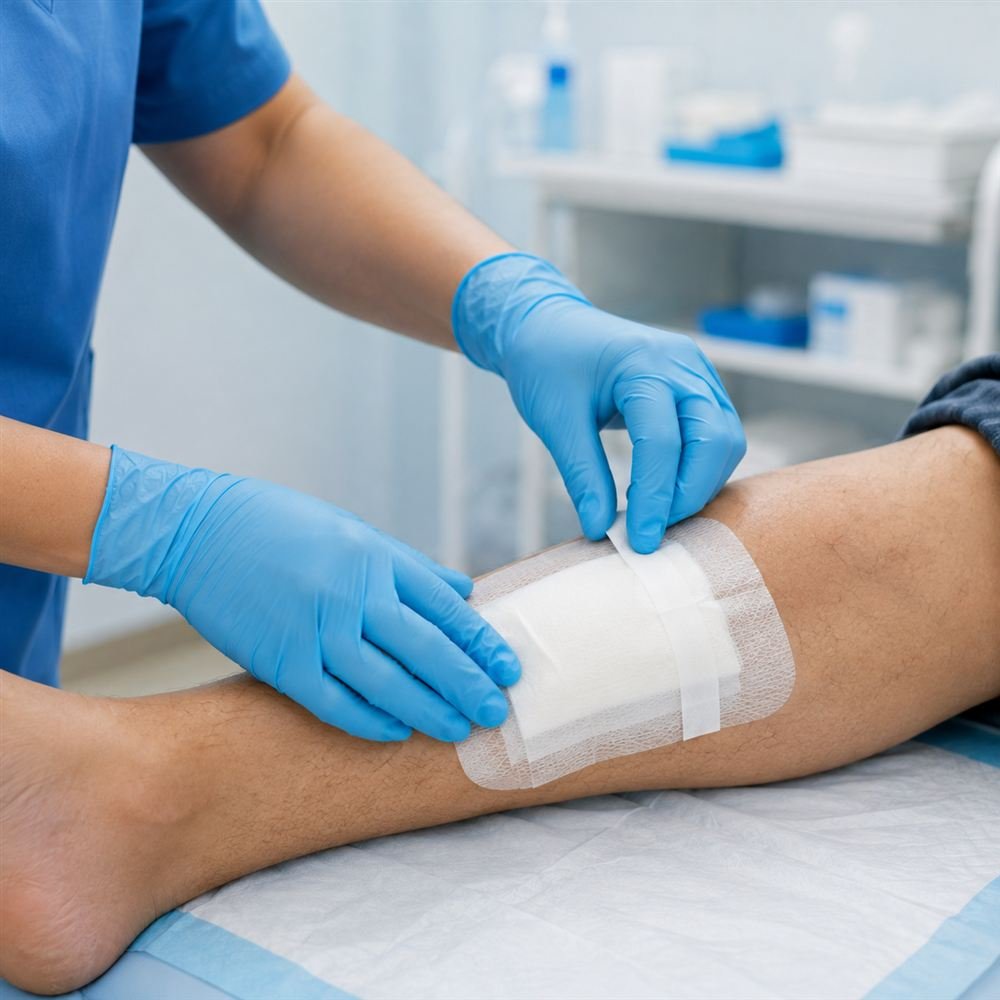
There is no single best dressing. The right one depends on what the wound is doing. In simple terms:
- Dry or low-draining wounds often need a light, non-stick pad that protects without sticking to healing tissue.
- Wounds that leak a lot need an absorbent dressing that holds fluid away from the skin around the wound.
- Deeper wounds may need a dressing that fills the space and keeps the base moist.
- Healing wounds may move to a lighter dressing as they close.
This is why the nurse looks at the wound before choosing, and why the dressing can change from one week to the next.
Get medical help urgently if you see: fever or chills, redness spreading from the wound, pus or a foul smell, black or dead-looking skin, heavy bleeding, or sudden drowsiness or confusion. Do not wait for the next dressing visit.
Why Change Frequency Varies
A dressing that is changed too often can disturb new tissue, while one that is left too long can become soaked and let germs in. The right gap depends on how much the wound leaks, how clean it is, and which dressing is on it. The nurse sets the schedule and adjusts it, rather than following a fixed calendar.
Getting Ready for the Nurse
- Pick a clean, well-lit spot where the patient can sit or lie comfortably.
- Keep any doctor's notes, discharge papers and the medicine list together.
- Do not remove the old dressing yourself unless told to.
- Take a photo of the wound each day, in good light, to show any change.
For help between visits, these habits support wound healing. If you are unsure whether the wound needs a specialist, read when to see a wound care specialist.
Booking and Costs
Call or WhatsApp us with a short description of the wound, where it is on the body, and your area in Ghaziabad or Gurgaon. A photo helps. A nurse reviews the details and plans the first visit. We do not quote a fixed rate without knowing the wound, because the number of visits and supplies differ for each patient. Share the details and the team will explain the plan before you commit to it.