
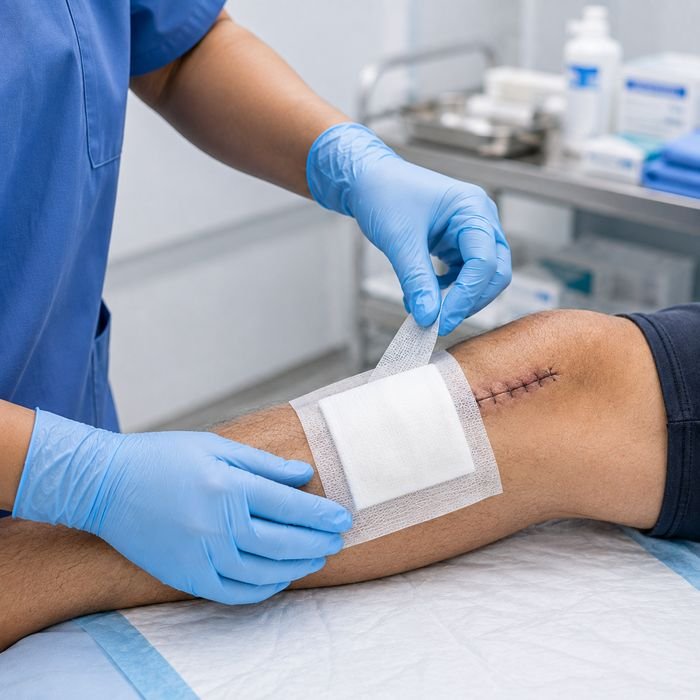
Once you're discharged after surgery, the responsibility for the incision shifts largely to you and your family. Hospitals typically send patients home well before an incision is fully healed, which means proper wound care during those first few weeks at home directly affects how well — and how quickly — the wound closes.
The First Few Days After Discharge
Follow your surgeon's specific instructions first — but in general:
- Keep the original dressing dry and undisturbed unless your surgeon says otherwise
- Avoid soaking the area (baths, swimming) until cleared, though a brief shower is often fine once approved
- Don't apply any cream, powder, or ointment unless your doctor has specifically prescribed it
- Watch for the dressing change schedule you were given — some incisions need daily changes, others need to be left alone longer
Signs of Infection to Watch For
Most surgical incisions heal without complication, but it's important to know what a problem looks like:
- Increasing redness spreading outward from the incision
- Warmth, swelling, or firmness around the wound
- Pus or unusual discharge — cloudy, green, or foul-smelling
- Increasing pain instead of gradual improvement
- Fever, chills, or feeling generally unwell
- The incision reopening or edges separating
Why this matters: Post-surgical infections are most likely to develop within the first one to two weeks. Catching early signs and getting the dressing changed correctly — rather than waiting to "see if it gets better" — is what usually prevents a minor issue from becoming a reason to go back to hospital.
Dressing Changes Done Right
A proper post-surgical dressing change involves more than just replacing gauze — it means cleaning the incision with the correct technique, checking underneath for any early signs of infection, and applying a fresh sterile dressing without contaminating the wound. This is especially important for larger incisions, wounds with drains, or patients who are also managing diabetes, both of which increase infection risk.
Supporting a Clean Recovery
- Eat protein-rich meals — protein is essential for tissue repair
- Stay hydrated and avoid smoking, which measurably slows wound healing
- Avoid activities that put tension or pressure on the incision until cleared
- Keep the follow-up appointments your surgeon scheduled, including for suture or staple removal
Why Home Nursing Support Helps
For many patients — especially after major surgery, or when mobility makes clinic visits difficult — having a nurse manage dressing changes at home removes the guesswork and the risk of doing it incorrectly. It also means someone experienced is checking the wound at every visit, catching early warning signs before they become serious.
At Wound Care Service, our nurses handle post-surgical wound dressing from discharge through to suture removal, tracking the incision's progress visit to visit and coordinating with your surgeon's care plan.