
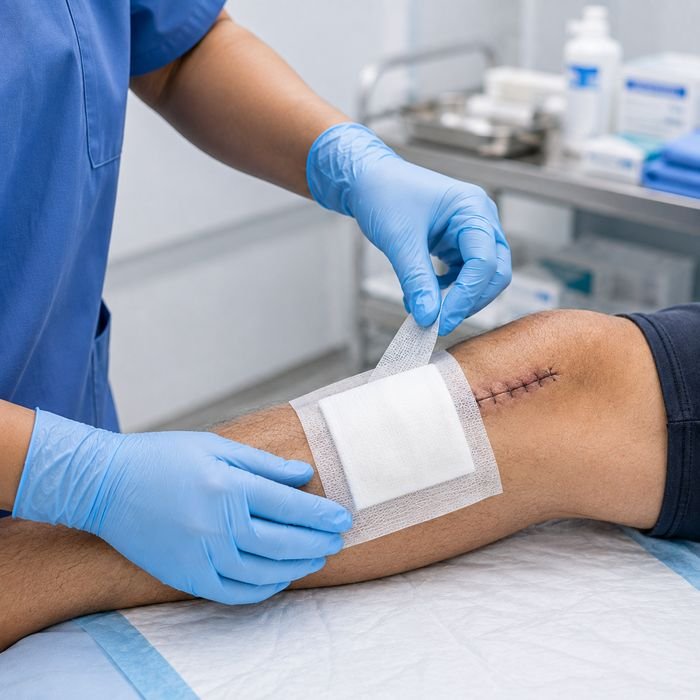
Stitches and staples do their job by holding a wound closed while it heals — but they're not meant to stay in forever. Once the skin underneath has healed enough to hold together on its own, they need to come out. Timing and technique both matter more than most people expect.
When Are Sutures Usually Removed?
It depends on where the wound is and how much tension the area is under:
- Face and neck: often 3–5 days, since these areas heal fast and scarring is a bigger concern
- Scalp: around 7–10 days
- Arms and trunk: typically 7–10 days
- Legs, feet and joints: can take 10–14 days or longer, since these areas move more and are under more tension
Your surgeon or doctor will usually specify the exact timeline for your particular incision — this is general guidance, not a substitute for their instructions.
What Happens If Sutures Stay in Too Long?
Leaving stitches or staples in past their removal date isn't just uncomfortable — it can cause real problems:
- The skin can grow around the suture material, making removal more painful and difficult
- Visible "railroad track" marks or scarring can become more pronounced
- The puncture points where the suture enters the skin become more likely to get irritated or infected the longer they stay
Why this matters: Suture removal has a narrow window — too early and the wound can reopen; too late and removal gets harder and scarring can worsen. Getting it done on schedule, by someone trained to check the wound is actually ready first, avoids both problems.
Is Suture Removal Painful?
Most patients describe it as a brief pulling or tugging sensation rather than real pain — each stitch takes only a second or two to remove. Staples are removed with a dedicated staple remover and feel similar. A trained nurse will also check the wound before removing anything, to confirm it has actually closed enough underneath.
Why Have a Nurse Do It at Home
Suture removal is a simple procedure, but it still benefits from being done correctly: the wrong technique can reopen a wound that hasn't fully closed, and skipping the check for hidden signs of infection underneath can let a problem go unnoticed. Having it done at home also avoids an extra trip to a clinic for what's normally a five-minute procedure.
At Wound Care Service, our nurses assess the incision, remove sutures or staples safely, and check the healed skin underneath before confirming everything looks as it should.