
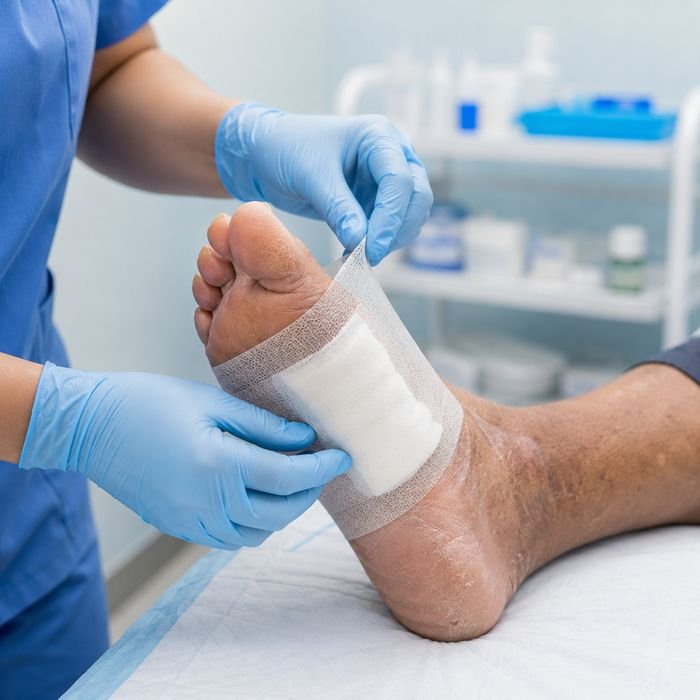
Why Delhi Conditions Matter for Diabetic Feet
Delhi's weather puts its own strain on diabetic feet. In the hot months, sweat trapped inside closed shoes and socks softens skin and encourages blisters. Walking barefoot on hot marble or tiled floors can burn skin that cannot feel the heat. During the monsoon, wet roads and open sandals expose feet to dirty water and small cuts. In winter, dry air cracks heels, and those cracks can open into sores.
None of this means a person must stay indoors. It means feet need checking more often through the year, and any break in the skin deserves attention early.
Get medical help urgently if you see: fever or chills, redness or swelling spreading up the foot or leg, pus or a foul smell, black or dead-looking skin, new severe pain, or blood sugar climbing out of control. Do not wait for the next dressing visit.
What to Avoid With a Diabetic Wound
Well-meant home treatment often does more harm than good. Please avoid:
- Cutting or scraping calluses and corns. This can create a wound you cannot feel.
- Soaking the foot for long periods. It softens the skin and can slow healing.
- Using strong antiseptics, turmeric, powders or home remedies on an open wound unless your doctor has told you to.
- Walking barefoot, even inside the house.
- Wearing tight or worn-out footwear. Pressure and rubbing keep a wound from closing.
- Ignoring a small sore. On a diabetic foot, a small sore can become a serious one in days.
Helping the Wound Heal Between Visits
The dressing protects the wound, but healing also depends on what happens the rest of the day. Keep blood sugar as steady as your doctor advises, take medicines on time, and keep weight off the wounded area as much as you can. Eating enough protein and drinking enough fluids also help skin repair itself. Our guide to daily habits that support wound healing goes into more detail.
Check both feet every day, including between the toes. If your eyesight or flexibility makes this hard, ask a family member to look, or use a mirror.
How Booking Works
Call or WhatsApp us with a short description of the wound, where it is on the foot, and your area in Delhi. A photo helps. A nurse reviews the details, arranges an assessment visit, and recommends a dressing schedule. If you are already under a doctor, the nurse follows the doctor's instructions and keeps the plan in line with them. Not sure whether you need a specialist? Read when to see a wound care specialist. If a wound needs dead tissue removed, that is planned with your doctor; see wound debridement.
We do not quote a fixed rate without knowing the wound, because the number of visits and supplies differ from patient to patient. Share the details and the team will explain the plan before you commit to it.