
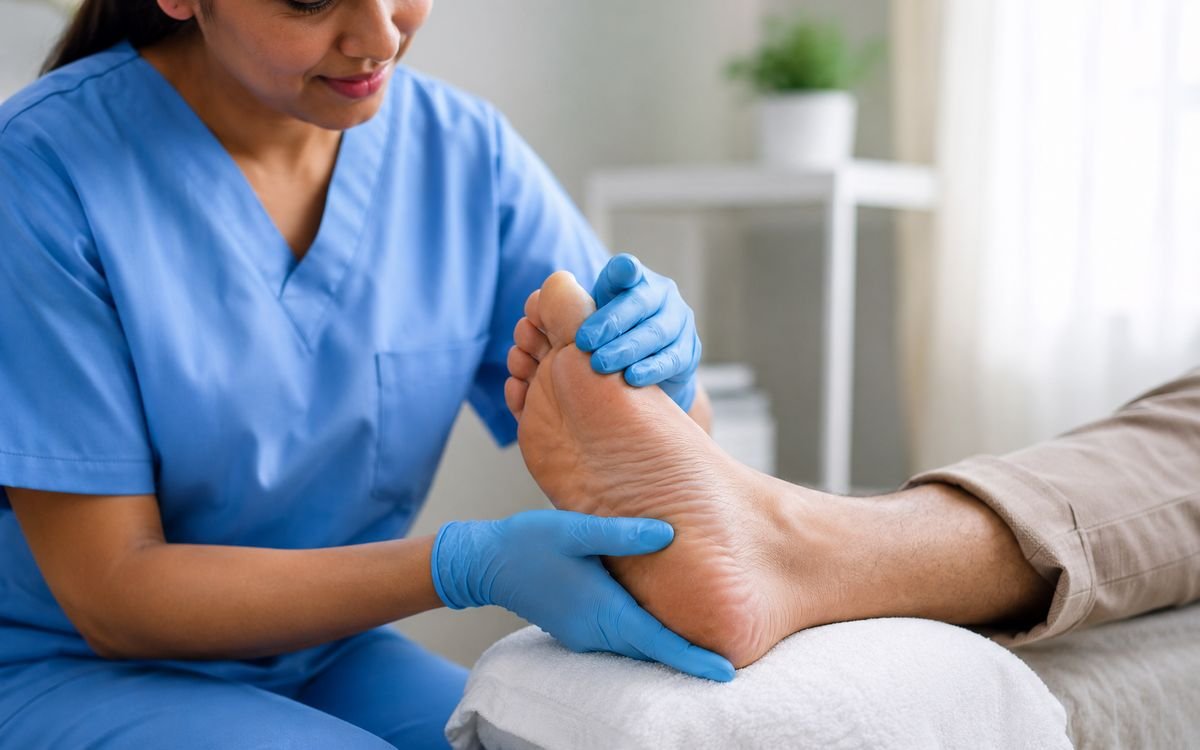
What a Dressing Can and Cannot Do
A good dressing keeps the wound clean, moist enough to heal, and protected from germs. It cannot fix the things that stop a diabetic foot ulcer healing in the first place: constant pressure on the sore, poor blood flow, and high blood sugar. Healing needs all of these handled together, with the dressing as one part.
So along with changing the dressing, the nurse will ask how the injury happened, what footwear is worn, and how much the patient is walking. Small changes here often decide whether an ulcer closes or keeps coming back.
Get medical help urgently if you see: fever or chills, redness or swelling spreading up the foot or leg, pus or a foul smell, black or dead-looking skin, new severe pain, or blood sugar that will not come down. Do not wait for the next dressing visit.
Foot Habits for Apartment and Society Living
Life in Noida's societies has its own risks for diabetic feet. A few habits that help:
- Wear proper footwear for evening walks. Society parks and walking tracks are popular, but thin slippers or worn shoes can rub and cause blisters you cannot feel.
- Do not go barefoot indoors. Tiled and marble floors can hide small sharp objects, and a dropped pin or glass splinter can cause a wound that goes unnoticed.
- Check shoes before putting them on. Run a hand inside for stones, folds or rough seams.
- Look at both feet every evening. Include the soles and between the toes. Use a mirror, or ask someone at home to look.
- Dry carefully after washing. Damp skin between the toes breaks down easily.
Before the Nurse Arrives
A little preparation makes the first visit smoother:
- Tell the society gate or guard that a nurse is visiting, and share the tower and flat number when booking.
- Keep a clean, well-lit place where the patient can sit or lie comfortably with the foot raised.
- Have the current medicine list, recent blood sugar readings and any doctor's notes within reach.
- If the wound has changed since you first contacted us, take a fresh photo.
If you are unsure whether the wound needs a specialist, read when to see a wound care specialist. For support between visits, these healing habits cover food, rest and fluids.
Booking and Costs
Call or WhatsApp us with a short description of the wound, where it is on the foot, and your sector in Noida or Greater Noida. A nurse reviews the details and recommends a dressing schedule after the first assessment.
We do not quote a fixed rate without knowing the wound, because the number of visits and the supplies needed differ from patient to patient. Share the details and the team will explain the plan before you commit to it. Staying in Delhi instead? See our page on diabetic wound dressing in Delhi.