
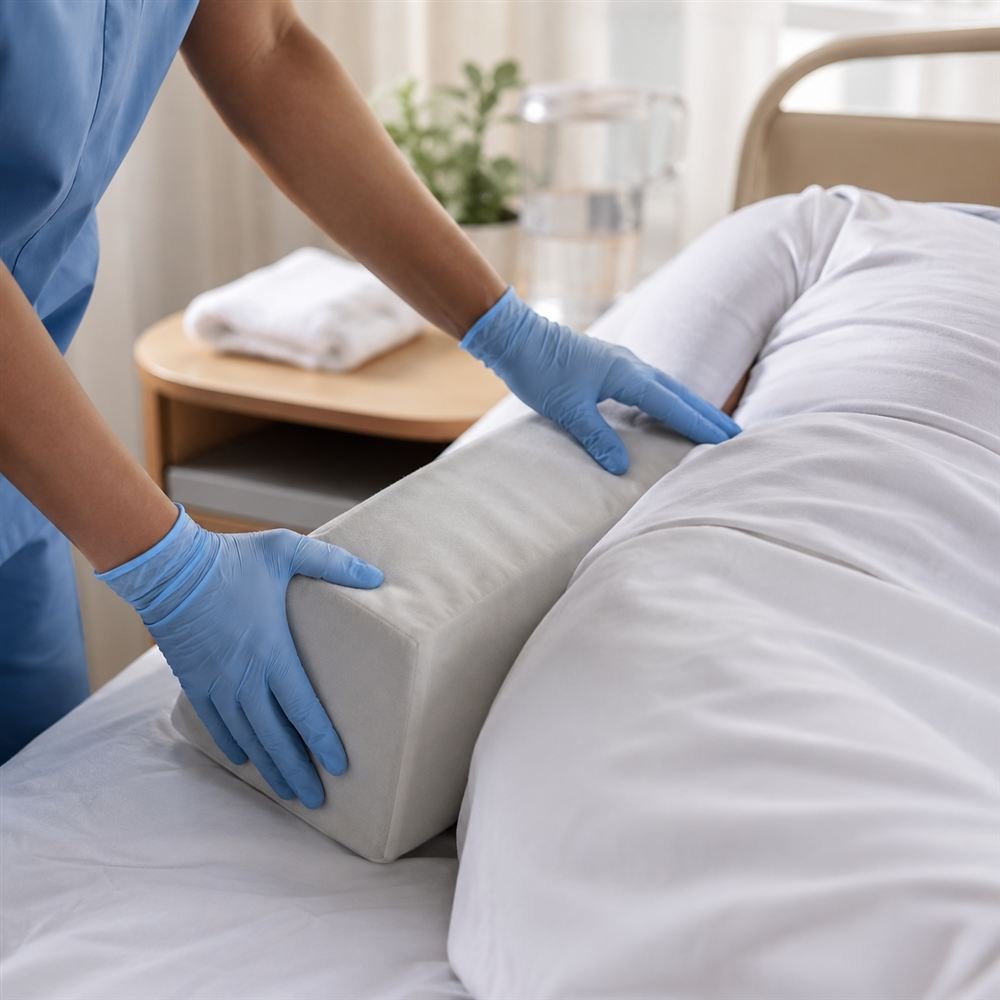
A Simple Turning Routine
Turning is the single most useful thing a family can do. In general:
- Change the patient's position at least every two hours, or as the nurse or doctor advises.
- When lying on the side, tilt the body at roughly a 30-degree angle with pillows behind the back, rather than resting straight on the hip bone.
- Lift, do not drag. Use a draw sheet or ask for help, so skin is not rubbed against the bed.
- Keep the head of the bed as low as the patient's condition allows, because sitting up high makes the body slide down.
- Place a pillow under the calves so the heels float free of the mattress.
Get medical help urgently if you see: fever or chills, redness spreading around the sore, pus or a foul smell, black or dead-looking tissue, bone or tendon showing, heavy bleeding, or sudden drowsiness or confusion. Do not wait for the next visit.
Mattresses, Cushions and Other Aids
A good foam mattress with regular turning may be enough for a patient at low risk. Higher-risk patients often do better on a pressure-relieving or alternating-pressure mattress. Foam wedges and pillows help hold a side-lying position, and heel protectors or a pillow under the calves protect the heels. Avoid ring or donut-shaped cushions. The nurse can advise which of these is worth buying for your situation, so you do not spend on equipment you do not need.
Where to Check Every Day
Look at the skin once or twice a day, especially over bony areas:
- Heels and ankles
- Tailbone and lower back
- Hips
- Shoulder blades and elbows
- Back of the head
Redness that does not fade within a short time after pressure is taken off is an early warning. Tell the nurse straight away. Our guide to bed sore stages and treatment explains what each stage looks like.
Skin Care and Nutrition
Keep the skin clean and dry. Clean gently after any accident, pat dry instead of rubbing, and change damp bedding and clothing. Do not massage reddened areas. Protein and fluids help skin repair, and our note on daily habits that support wound healing covers this. A deep sore with dead tissue may need further treatment; see wound debridement.
One Service Across Delhi NCR
Delhi NCR spans several cities, and many families have a parent in one and a working child in another. The service is the same in all of them, with the same hours and the same approach, so a family in one city can book care for a patient in another. Share the patient's address, a number for someone at home and any doctor's instructions, and ask for the visit notes so you can follow progress from wherever you are.
Booking and Costs
Call or WhatsApp us with the patient's condition, where the sore is on the body, and your area. A photo helps. A nurse reviews the details and plans the first visit. We do not quote a fixed rate without knowing the case, because the number of visits and the supplies needed differ for each patient. Share the details and the team will explain the plan before you commit to it.